
Submandibular Mucoepidermoid Carcinoma Recovery: Your Rehabilitation Journey
Apr 13, 2026You finished treatment. Now what? Understanding your recovery after submandibular mucoepidermoid carcinoma
A submandibular mucoepidermoid carcinoma diagnosis changes everything and so does treatment. Surgery, radiation, or both can leave you navigating a body that feels unfamiliar: a jaw that won't open fully, a neck that swells, a mouth that refuses to cooperate at mealtimes. You did the hard part. Now rehabilitation begins and it is more specific, more structured, and more effective than most patients realize
As a team of rehabilitation specialists, lymphedema therapists, and speech-language pathologists working daily with head and neck cancer patients, we understand that salivary gland cancer recovery is not one problem, it is several problems layered on top of each other, each requiring its own clinical strategy so , Our clinical team has created a step-by-step Therapist Checklist: 6-12 Months Post Submandibular Mucoepidermoid Carcinoma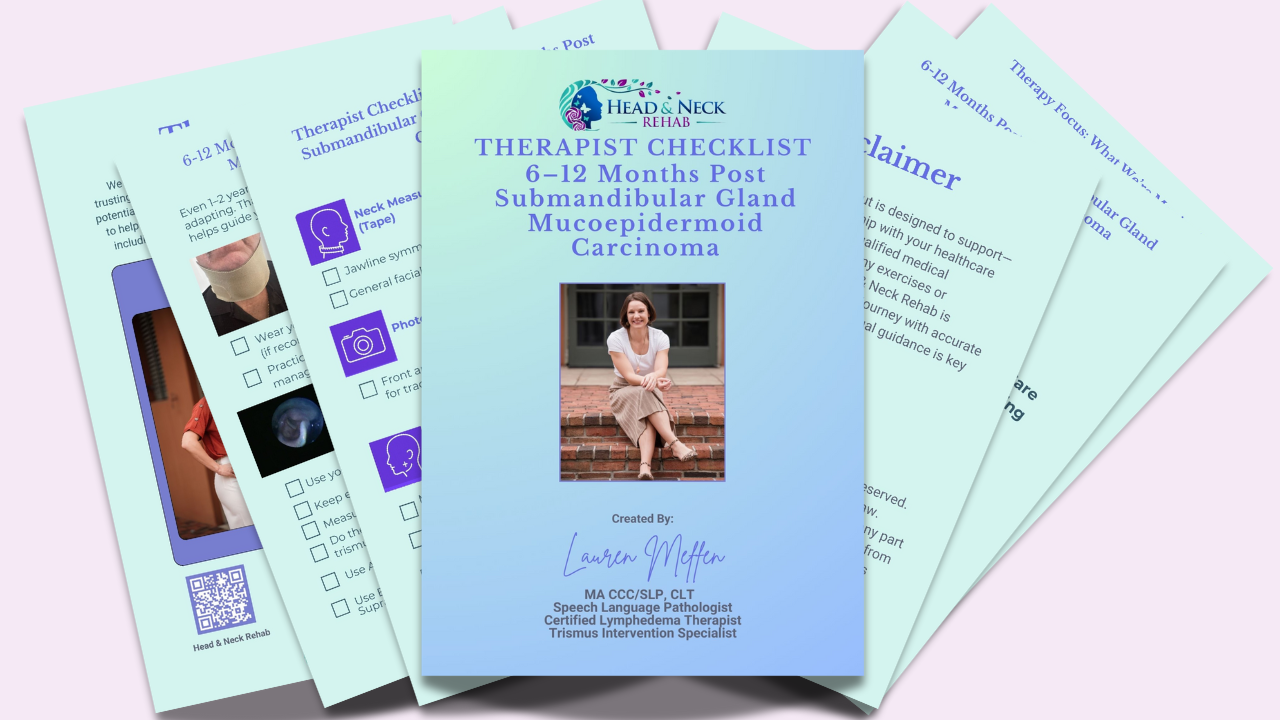
How to manage mouth sores during cancer treatment: your mucositis guide
Mucositis is one of the most common and most distressing side effects of radiation therapy for head and neck cancer. If your mouth has become painful, raw, or difficult to use around weeks three or four of treatment, this is why
Why it happens
Cancer treatment targets fast-dividing cells which is exactly why it works against tumor tissue. But the lining of your mouth also renews itself rapidly, which makes it vulnerable to the same process. Radiation irritates and breaks down this lining, causing inflammation and sores to develop along the inner cheeks, tongue, gums, and throat
The result: eating, drinking, and swallowing - things your body once did automatically - can become genuinely painful. This is not a sign that treatment is failing. It is a predictable biological response, and it is manageable
What you may notice
Red or painful sores inside the mouth, cheeks, or throat
Difficulty eating spicy, acidic, crunchy, or hot foods
Increased pain or sensitivity when swallowing
Dryness or sticky, thick saliva
A white film or coating inside the mouth
Reduced mouth opening due to soreness and inflammation
How to manage it: clinician-recommended strategies
These are some advices to reduce mucositis severity, support healing, and protect your ability to keep eating and swallowing. which matters more than most patients realize. Keeping swallowing going, even with liquids only, is one of the most important things you can do during this period
Rinse often. Use a baking soda and salt rinse (¼ teaspoon each in a cup of water) four to six times a day. Why it works: this solution neutralizes acid in the mouth, removes debris, and reduces bacterial load on sore tissue without the alcohol found in commercial mouthwashes that would irritate damaged mucosa further
Stay hydrated. Take small sips of water consistently throughout the day. Why it works: mucositis tissue is inflamed and fragile. Consistent small sips keep the tissue moist, reduce pain from dryness, and make swallowing easier
Choose soft, moist foods. Yogurt, blended soups, scrambled eggs, oatmeal, mashed potatoes, and smoothies are your foundation. Apply it today: add gravies, sauces, or broth to any food that feels dry. Even a small amount of extra moisture significantly reduces the effort and pain of chewing and swallowing
Avoid known irritants. Spicy, acidic, crunchy, and very hot or cold foods and drinks will aggravate inflamed tissue. Alcohol-based mouthwashes do the same. Apply it today: test food temperature by touching it to your inner wrist before eating. Lukewarm is your target
zone during this phase
Keep your mouth clean. Use a soft toothbrush and brush gently two to three times per day. Why it works: oral bacteria thrive in inflamed tissue and can worsen mucositis. Gentle cleaning prevents secondary infection without traumatizing already-damaged tissue
Jaw stiffness after radiation for head and neck cancer :
Trismus , the gradual restriction of jaw opening caused by radiation fibrosis or surgical scarring , affects a significant number of head and neck cancer patients. If you have noticed that opening your mouth fully has become increasingly difficult in the months following treatment, you are experiencing one of the most functionally impactful and most treatable complications of salivary gland cancer therapy.
Radiation to the jaw and surrounding muscles causes fibrosis, a progressive hardening and shortening of the muscle tissue, that reduces your maximum mouth opening over time. Left unaddressed, trismus worsens and can severely impact eating, dental care, speech, and even airway management. The critical clinical fact: trismus responds best to early, consistent intervention. Starting jaw exercises early - even before you notice significant restriction - is the most effective preventive strategy
What you can do: jaw mobility exercises
Gentle, pain-free jaw exercises performed consistently are the cornerstone of trismus prevention and management. Slowly opening and closing your mouth, moving your jaw from side to side, and gentle forward protrusion, performed within a comfortable, pain-free range help maintain muscle flexibility and prevent fibrosis from advancing.
The principle here mirrors any physiotherapy intervention: you are not forcing range of motion; you are maintaining it. Five minutes of gentle jaw movement performed three times daily produces measurably better outcomes
The ARK-J device: what it is and how it helps
The ARK-J is a clinically validated jaw-stretching device designed specifically for patients with trismus following head and neck cancer treatment. It uses a controlled, progressive resistance mechanism to gently and consistently open the jaw beyond what active exercise alone can achieve particularly when fibrosis has already begun to restrict movement significantly
The device works by providing a sustained, low-load stretch to the affected jaw musculature, which is precisely the mechanical stimulus that promotes tissue remodeling in radiation-induced fibrosis. Unlike aggressive passive stretching - which can cause micro-trauma and worsen fibrosis - the ARK-J provides a safe, measurable, and reproducible stretch that patients can apply at home between clinical sessions.
Passive ROM Device ARKJ Wedge— e.g. 'Watch a demonstration for the ARK-J device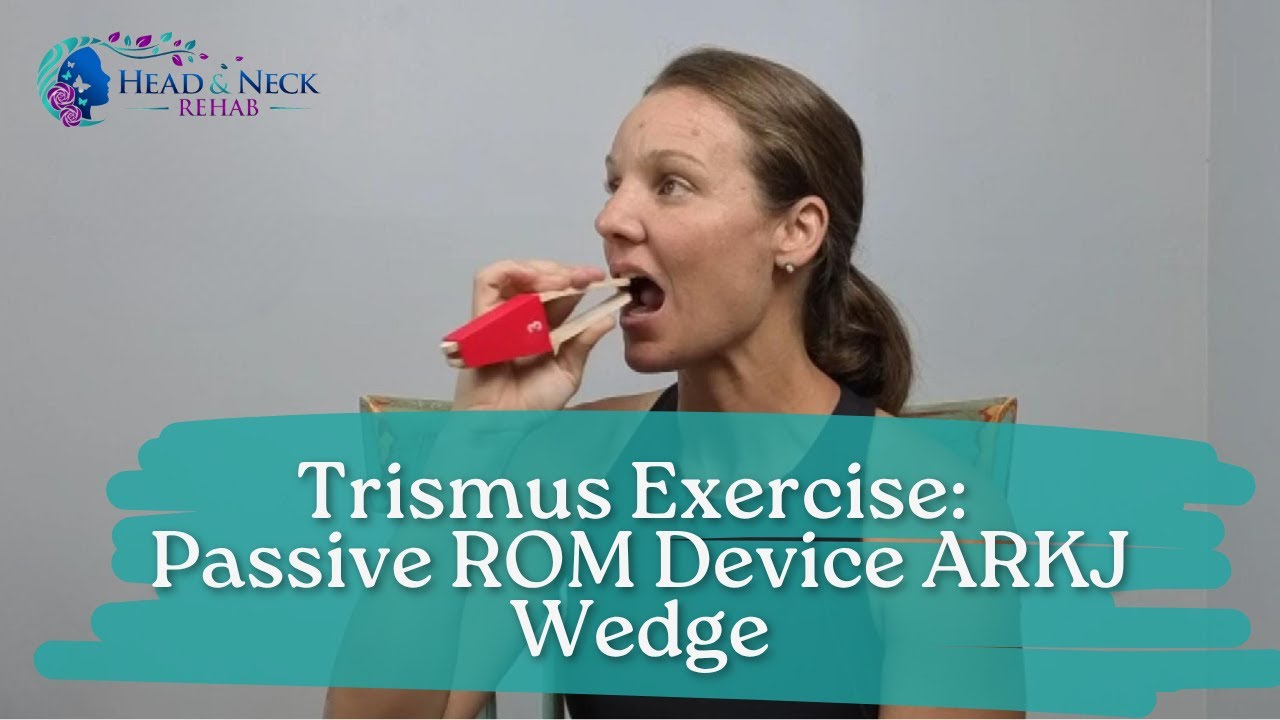
When to start and what to expect
- Begin jaw exercises as soon as your clinical team clears you , ideally during or immediately
after radiation, not months later
- Use the ARK-J as directed by your rehabilitation specialist , Daily use produces significantly better outcomes than sporadic sessions
- Track your maximum mouth opening weekly using a ruler or the three-finger test (three fingers stacked vertically should fit between your upper and lower teeth in a normal opening) , improvement is gradual. Many patients see meaningful gains over 6–12 weeks of consistent exercise and device use.
Swallowing and speech changes after submandibular gland cancer: what rehabilitation can do
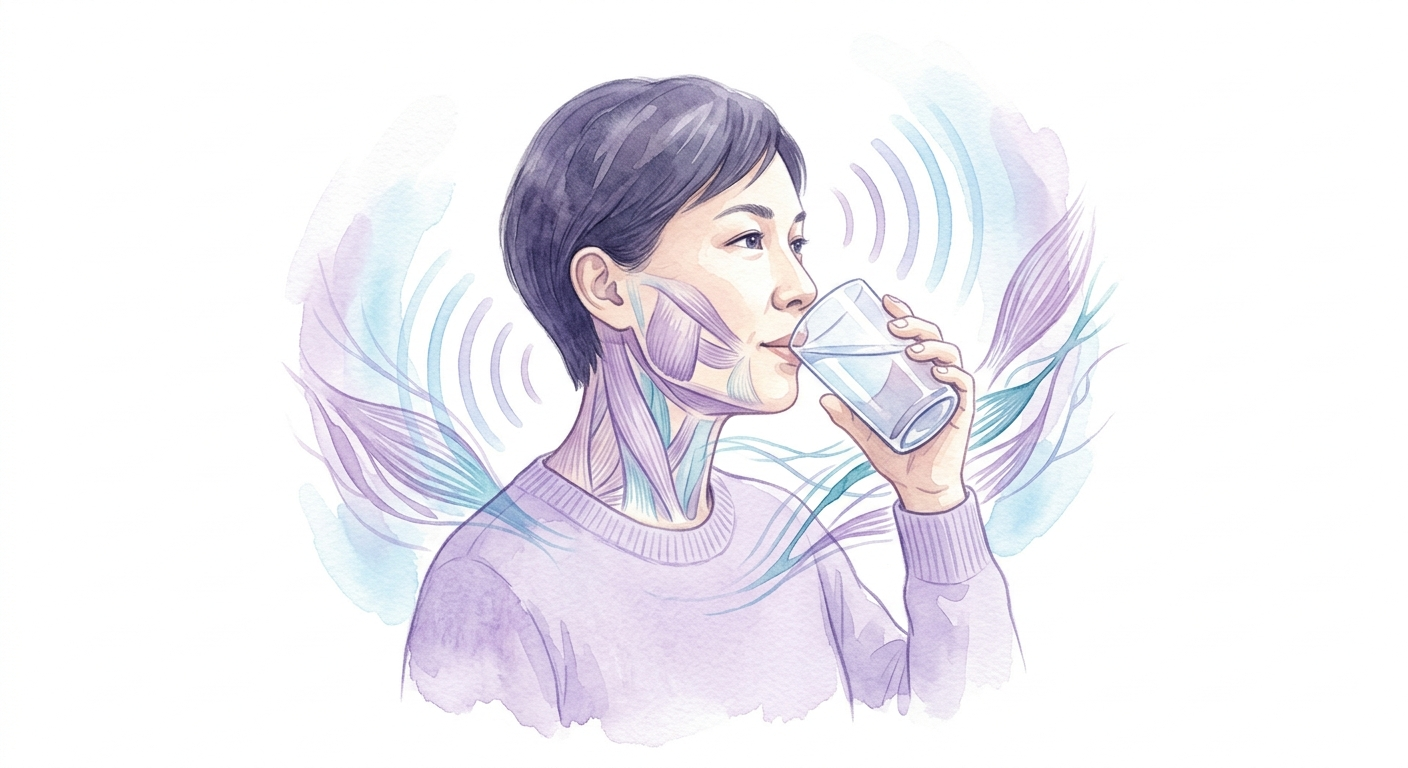
Surgery and radiation in the submandibular region affect more than the targeted tissue. The muscles, nerves, and structures involved in swallowing and speech are closely interconnected, and treatment - however precisely delivered - can alter how they function. If eating feels more effortful, if food or liquid ever goes the wrong way, or if your voice sounds different since treatment, these are not signs you should simply adapt to. They are signals that swallowing and speech rehabilitation can address directly.
As speech-language pathologists working in oncology rehabilitation, we assess and treat the full spectrum of post-treatment swallowing and communication changes. This includes modified barium swallow studies to identify exactly where in the swallowing process the difficulty lies, targeted exercise programmed to rebuild swallowing muscle strength and coordination, and dietary modification guidance that keeps nutrition safe without making mealtimes a source of fear.
The importance of keeping swallowing active
One of the most evidence-supported principles in dysphagia rehabilitation is this: swallowing muscles that stop being used, atrophy. This is why maintaining swallowing , even on a liquid or soft diet, even when it is uncomfortable , is a clinical priority, not a quality-of-life preference. Patients who continue swallowing during and after treatment, even at reduced volumes, consistently show better long-term swallowing function than those who stop.
Your rehabilitation team will guide you on the safest diet texture for your current swallowing ability, and progress you systematically as your function improves. You do not have to do this by guesswork, objective assessment makes this a precise, evidence-driven process.
Signs that swallowing rehabilitation can help you
- Food or liquid entering your airway (coughing, choking, or a wet-sounding voice after eating or drinking)
- Feeling that food sticks in your throat or chest
- Significantly increased time and effort required to eat a meal
- Unexplained weight loss since treatment
- Avoiding social situations involving food due to anxiety about swallowing
- Changes in voice quality, resonance, or clarity since treatment
Recovery is not passive and you do not have to navigate it alone
Submandibular mucoepidermoid carcinoma treatment is behind you. What lies ahead is a rehabilitation process that is active, evidence-based, and tailored to your specific functional challenges. Mucositis resolves. Trismus responds to structured exercise. Lymphedema is manageable with the right technique. Swallowing functions can be protected and restored.
The difference between patients who reclaim their quality of life and those who don't is not luck , it is access to the right clinical team, at the right time, with the right strategies. That is what this guide, and our team, are here to provide.
Stay connected with news and updates!
Join our mailing list to receive the latest news and updates from our team.
Don't worry, your information will not be shared.
We hate SPAM. We will never sell your information, for any reason.